


kevin@selfuelectricalwire.com +86-15221873936
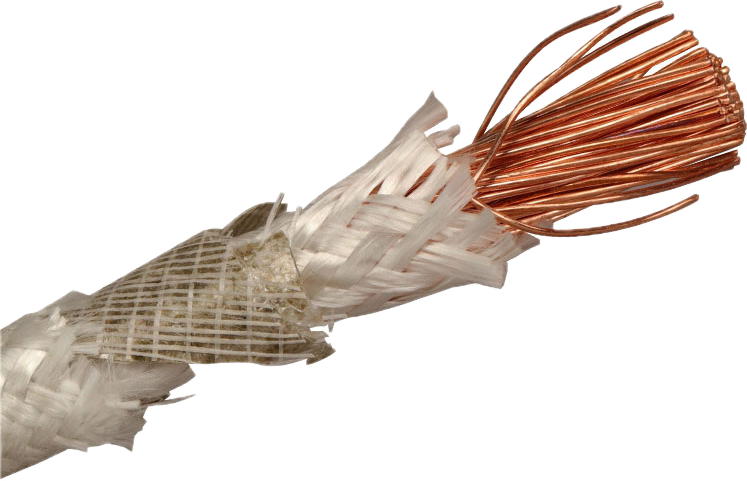
Mica tape-wrapped high-temperature cables — commonly known as mica cables — use mica tape as the core insulation material, offering exceptional fire resistance and electrical insulation. This makes them a reliable solution for power transmission under extreme temperature conditions.
1. Key Advantages
(1) Excellent Insulation and Fire Resistance
Mica cables use high-purity mica tape as the main insulation layer.
Its unique layered silicate structure effectively blocks electric arcs and carbonization paths, ensuring stable performance during fire or high-temperature exposure.
(2) Superior High-Temperature Resistance
Mica tape high temperature wire can operate continuously at 500°C–1000°C.
This makes mica cables suitable for harsh environments such as metallurgy, ceramics, glass manufacturing, and power generation, preventing insulation melting or degradation.
3) Enhanced Mechanical Strength and Protection
After mica tape wrapping, the cable is usually reinforced with fiberglass braiding or alkali-free glass yarn, providing excellent abrasion resistance, moisture resistance, and flexibility — suitable for various installation conditions.
2. Considerations for Selection
(1) Mechanical Strength at Extreme Temperatures
Mica becomes brittle under long-term high heat, which may reduce bending or tensile strength.
For cables used in vibrating or movable environments, reinforced structures are recommended.
(2) Voltage Class Limitation
Single-layer mica tape insulation is typically suitable for voltages below 600V.
For applications above 1kV, a multi-layer or composite insulation structure is required to ensure safe performance.
(3) Higher Manufacturing Cost
Due to the high purity of synthetic or fluorophlogopite mica and the precision required in wrapping and sintering, mica cables are more costly than silicone or PTFE cables — but they deliver unmatched safety and reliability.
3. Structure & Material Options
(1) Conductor Type
Bare Copper – economical, but prone to oxidation above 500°C.
Nickel-Plated Copper – improved corrosion resistance and durability.
Pure Nickel – best option for ultra-high-temperature use (800°C+).
(2) Mica Tape Structure
Wrapped Mica Tape – common and cost-effective; performance depends on mica tape quality.
Sintered Mica Tape – tightly bonded after high-temperature treatment, offering denser insulation and better moisture resistance.
(3) Temperature Grades
Standard Type (350°C–500°C) – typically phlogopite or standard synthetic mica with fiberglass braiding.
High-Temperature Type (600°C–1000°C) – uses high-performance synthetic mica and sintering process for superior protection.
4. Application Fields
Fire-Resistant Cable Systems: Firefighting, emergency lighting, evacuation, and life-safety systems.
High-Temperature Industrial Zones: Steel mills, furnaces, power plants, and process equipment wiring.
New Energy Vehicles: Battery packs, motor drives, and thermal management systems.
Aerospace & Defense: Engine compartments and control systems requiring lightweight and reliable performance.
5. Sum up
Mica tape is the key material behind the excellent performance of mica cables.
Selecting the right mica type, wrapping process, and conductor material ensures the cable meets the electrical, thermal, and mechanical requirements of its application.
High temperature resistance mica wrapping wire u
FEP Wire uses and advantages
How to choose a reliable supplier of high temper
Contact: Kevin Wang
Phone: +86-15221873936
Tel: +86-15221873936
Email: kevin@selfuelectricalwire.com
Add: J.4thFloor.Building 36,No,70 Bole Road,Jiading,Town,Jiading District.Shanghai.China